


Faced with turning a workpiece from square material the only choice for most will be to use the four jaw chuck. If a one off, or just a few parts are to be made, then this may be acceptable but for larger quantities, especially with smaller sections, using the four jaw can be a chore. The idea for this project surfaced when faced with making around 100 3mm square nuts for a model cart. It is though worth considering for smaller quantities and larger section bar.
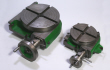
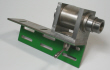
Typically, if requiring to hold 6 mm square, then using a collet would be appreciably better than using the four jaw. Unfortunately though, collets for holding square material are not available with some forms and expensive with others, and this article seeks to overcome the problems by adding auxiliary jaws to a round collet. A set for holding 6mm square material in a 12mm collet is shown in Photograph 1, centre, together with a set of a smaller size (right) and a partially finished set(left) with Photograph 2 showing the 6mm set in use.
Manufacture
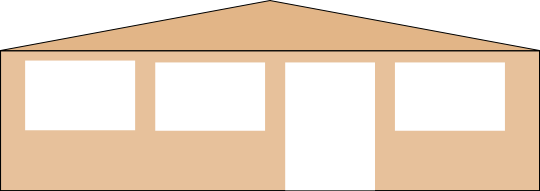
Cut four pieces of square material and assemble with card packing as shown in Sk.1. The size of material suggested enables a head to be made on the jaws thereby preventing them from entering fully into the round collet when in use.
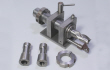
With the assembly mounted in the four jaw and projecting by the chosen jaw length plus an additional 5 mm the ends of the four pieces are faced level followed by machining the outer diameter to a minimum diameter of 2mm greater than the round collet in which they are to be used, and turning the required length to the collet diameter, Photograph 3. Remove from the four jaw and set up the collet chuck and return the jaws so as to turn the other end, Photograph 4, followed by parting off in the middle to produce two sets. Whilst the one set is still in the collet face the end to produce the head.
Next stage is to produce the required flats which can be done for small sizes by filing, Photograph 5, or for larger sizes by milling Photograph 6.
For small square sections, say less than 5mm, filing the flat is quite a quick operation, otherwise for a larger square it would be best done on the milling machine. For smaller sizes and with the jaw mounted in the vice as shown it is easy to measure the thickness at points along its length with a micrometer and make minor adjustments as is found necessary. Sketch2 shows how the thickness of the jaw is calculated.
When milling the jaws as shown in photograph 6 measuring the thickness is easily done with a depth micrometer across the two jaws and measuring to the parallel on which they are resting.
In the case of the first set of jaws that were parted off these must be returned to the collet chuck and gripping a length of square material so the front of the collet can then be faced and the head lightly chamfered and with that done the jaws are complete. If you do not have an application for the second set then these can be held in reserve until a use surfaces. If you anticipate eventually needing a number of sizes another double sets of blanks could be made for subsequent use whilst set up for the process. The whole process is quick and if making a number of sets then a half an hour per set maximum would be about the time taken.
Of course, the same size round collet need not be used in every case and a smaller size with smaller square section material for the jaws can be used when sizes of 3, 4, or 5mm square are being held as were also shown in photograph 1.
If you use the ER range of collets these jaws will give you a facility which is not available commercially and even in the case of 5C collets the hassle of locating a supplier and placing the order will no doubt be as time consuming as making a set, added to that is the bonus of a financial saving.
Being soft, jaws can easily be modified at a later date to take larger section material rather than making new jaws completely from scratch. This being another plus.
Round and Hexagonal
If an urgent need arises for a round collet that you do not have then a set could easily be bored out providing the card packing was still intact. You may even be able to take three pieces of hexagon bar and assemble them with card packing and make collet jaws to hold hexagonal material on just three sides. I think though that it would be advisable to mill a flat on one corner of each bar for the three jaw chuck to grip.
Photograph Captions
1. 3 sets of jaws, part made (left), 6mm (centre), 3mm (right)
2. The 6mm set of jaws in use.
3. Turning the first end of a pair of jaw sets using the three jaw chuck.
4. Turning the second end using a collet chuck.
5. Filing the flat required to grip square material.
6. Producing the flats by milling.
1
2
3
4
5
6
All pictures can be clicked on to provide a larger view